Fearful Gossip: The Masks We Wear
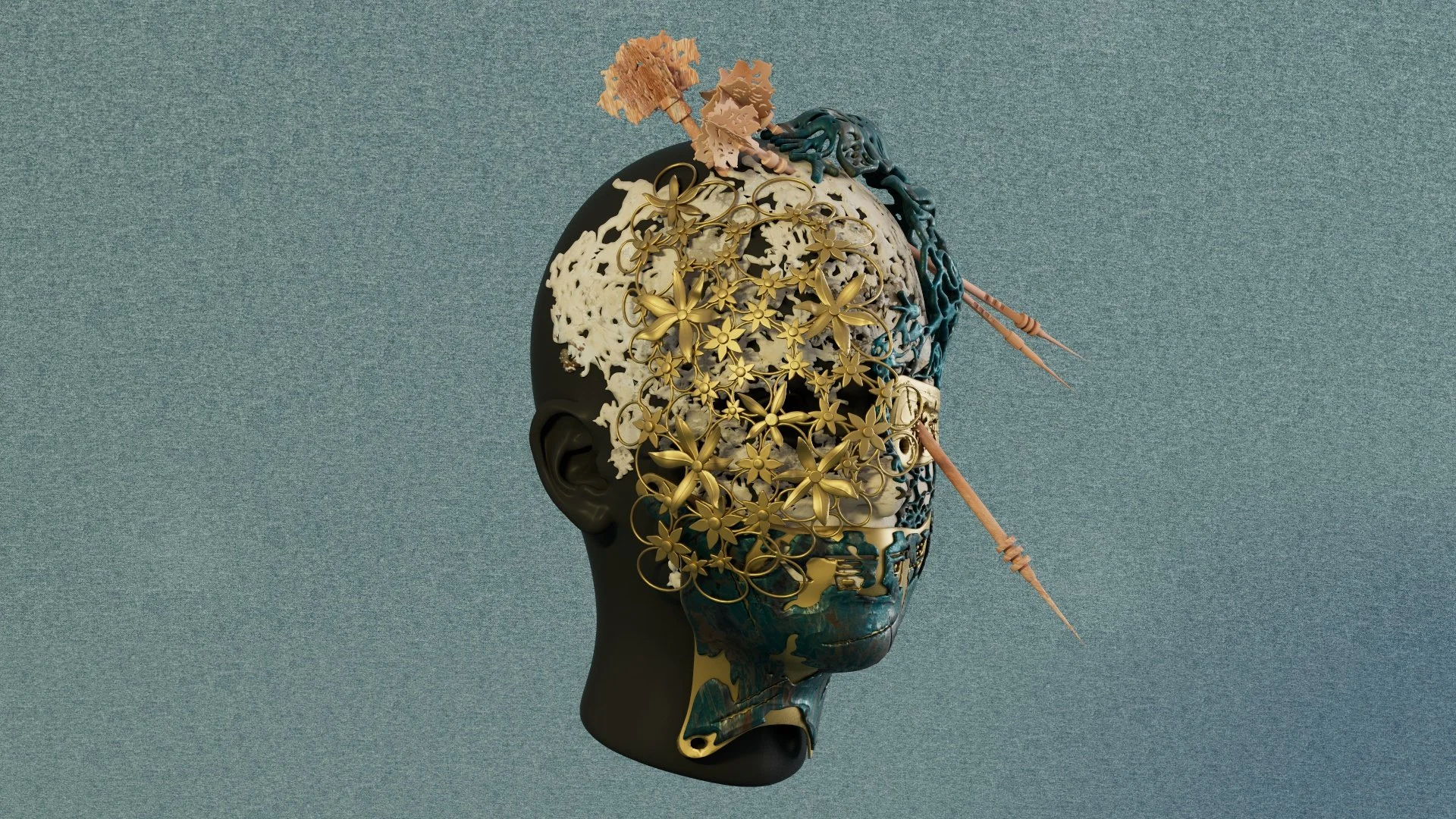
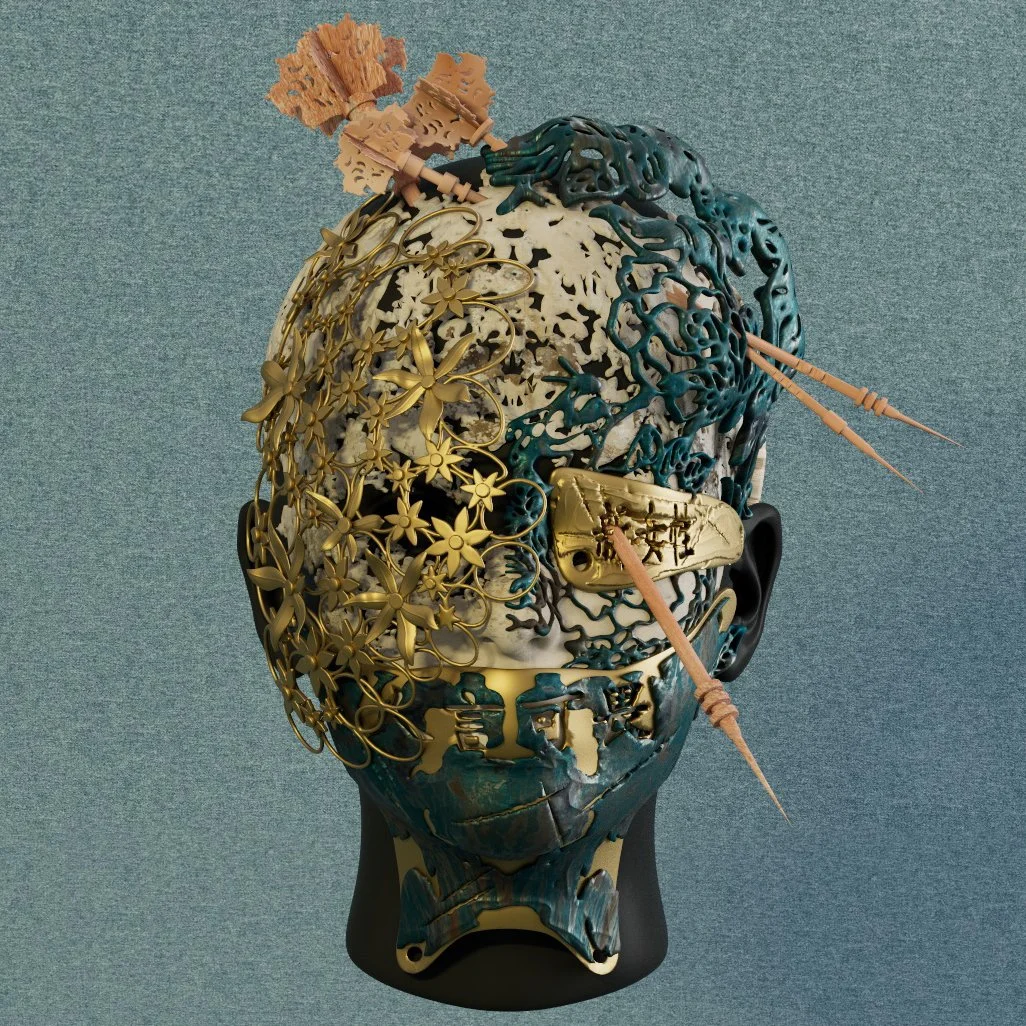
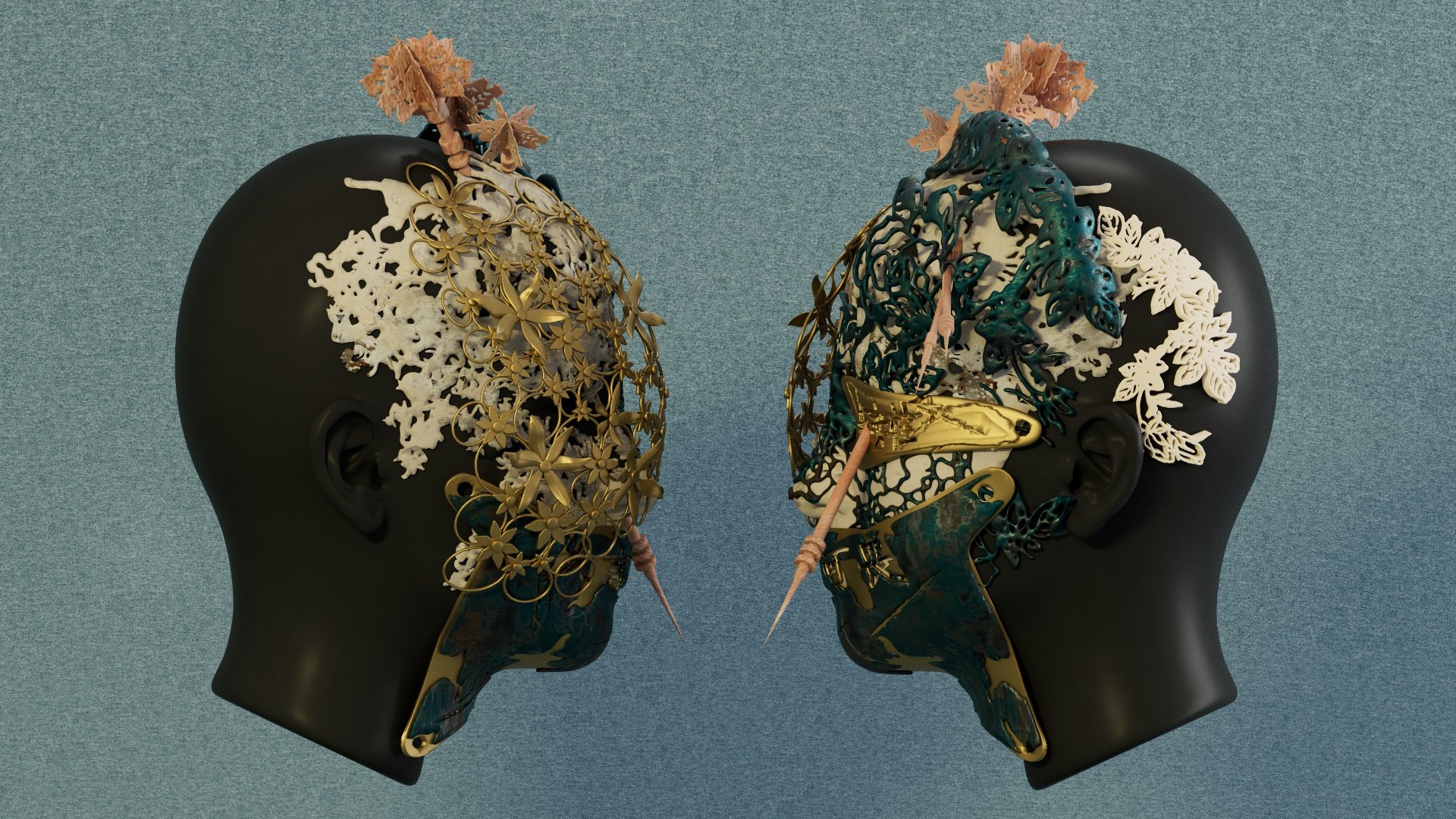
Digital Render
Artist Statement:
“Fearful Gossip: The Masks We Wear” is an experimental mask project created by artist Suyue Jin in collaboration with Jinxin Xu. The project was developed in response to Paul Laurence Dunbar’s poem “We Wear the Mask,” which describes the social and emotional burden of concealing pain behind a public face. Through the form of a wearable mask, the work translates ideas of concealment, misrepresentation, hidden suffering, and social performance into material, texture, ornament, and symbolic language.
For Suyue Jin, a lesbian woman who grew up in China, the mask became a personal and cultural metaphor. The work reflects the pressure of growing up under social expectations, gender judgment, and the fear of gossip, where one is often forced to hide vulnerability, desire, and identity behind an acceptable public image. On the mouthpiece, the phrase “人言可畏” can be translated as “the fearsome power of public opinion” or “words can wound.” It suggests how gossip, judgment, and social speech can become a form of violence. On the eye covering, the phrase “新女性,” or “New Woman,” refers to the modern woman who is expected to appear independent, beautiful, and socially progressive, while still being watched, judged, and constrained by traditional expectations.
The mask uses decorative floral patterns and delicate ornamental elements to create an image of beauty, femininity, and elegance. However, this beauty is intentionally unstable. The flower-like surface becomes a cage that covers and restricts the face, while the decorative hairpins transform into sharp blades piercing into the head. What first appears feminine and beautiful is revealed as violent and oppressive. The project turns ornament into injury, and beauty into restraint, suggesting that social expectations placed on women can become invisible weapons.
Through this contrast, “Fearful Gossip: The Masks We Wear” transforms the mask into a visual narrative of concealment, pain, and survival. It connects Dunbar’s idea of smiling through suffering with the lived experience of hiding one’s identity under social pressure. The work explores how public appearance can protect the self, but also imprison it. By combining symbolic language and wearable form, the project gives physical shape to the emotional violence of gossip, gender expectation, and forced self-concealment.