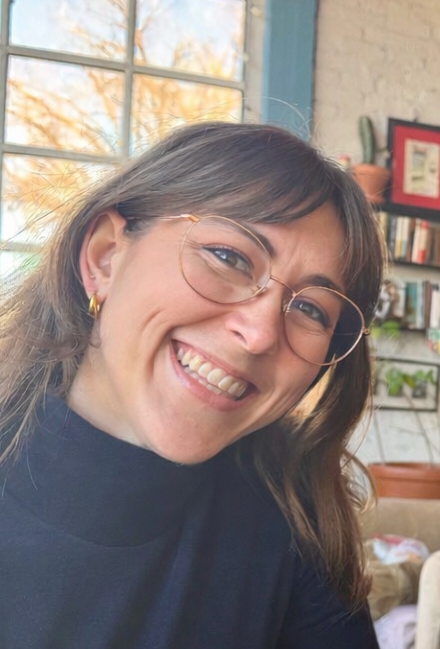
Emily Ann Jenkins
The simple fact of the matter is we were not supposed to go bowling. What we should’ve been doing was sitting in my truck bed, eating Taco Bell in a nest of picnic blankets, and watching “The Last Air Bender” on the big screen at the drive-in. And that’s what we had been doing. But it was painfully obvious, just twenty minutes in, that M. Night Shyamalan butchered the story beyond forgiveness, and I’m pretty sure we both would have combusted if we sat through that entire mockery.
So we left, and at Emily Ann Jenkins’ suggestion, we ended up at the bowling alley. Obviously the movie was an epic failure, so how could I object?
The change of plans really wasn’t so bad at first, even though I’ll never understand how anyone could nonchalantly stick their fingers into grubby little holes that, if we’re honest, are never cleaned by the teenage staff. And it wasn’t even so bad that the food served at the bowling alley included Nachos. Pizza. French fries. Mozzarella sticks. Finger food. And I swear, I wasn’t even thinking about the way that a bowling alley is a damn petri dish of contagions.
No. Not so bad. I swallowed the fear that there was a roach waiting inside the dark abyss of rough-edged holes in the same way I swallowed the fear that I should’ve worn dark-wash jeans or twisted my bangs away from my face. I really should’ve used the nine-pound ball, but it was such a horrific shade of green that it made my stomach gurgle, and the next best thing in our lane was a blue eleven-pounder. Now, had I been playing softball since I was seven? Yes. Had I been accustomed to swinging an eleven-pound weight over and over again? Well, no. After my first gutter ball, it was painfully obvious that my shoulder would be aching the next day.
The thought of Emily Ann Jenkins seeing me switch to that 2002-Nickelodeon-slime-green nine-pound ball made me want to crawl inside the gutter myself. So, I used the eleven-pound ball, ignored the throbbing in my arm, and watched it roll into the gutter, time and time again.
Emily Ann Jenkins never once made fun of me. Not even when we ordered french fries to share, and I stabbed into them with a plastic fork rather than eating them with my hands. I guess she learned a lot about my aversion to germs that night. But I learned a lot about her, too. I learned that she wasn’t much of a ketchup person — even now, I eat fries with honey barbecue because of her. I learned her favorite season is autumn because it’s cool enough to wear her favorite sweaters, but warm enough to walk to her favorite coffee shop; she wanted a tattoo of a goose when she turned eighteen, but she was afraid of needles; she wanted to go to community college after graduation to save money, but her mom insisted she go straight to university; her favorite color was yellow, like dandelions after an April storm.
I also learned that when she smiled at me with a plastic straw between her teeth, it was suddenly very, very difficult to breathe. And that, like mine, her parents didn’t know she was gay. And if they ever found out … well. She didn’t want them to find out.
On the third frame of our second game, she picked up my ball for me, plopped it right into my hands. It landed heavy in my lap before her fingers brushed against my knuckles so quickly I could’ve imagined it. But I know it had been real because, I swear, sometimes I still feel the warmth of her fingers on mine. Nearly invisible, fleeting, but intentional. And I think our connection, whatever we had, could’ve been something special. At least, it could’ve if we had been given a fair amount of time. If we had never been interrupted.
Naturally, right as we sat shoulder to shoulder, taking turns forking french fries into our mouths, Tyler-freaking-Eastwood and his big, stupid, pimply lacrosse-playing friends showed up. Okay, they weren’t all that pimply, but they were big. And stupid. And right along with them were Emily’s friends, all of them wearing their favorite peasant tops and eyeshadow shades too heavy for our 8:00am AP English class, but the dim lighting of the bowling alley honestly made me second guess whether I should’ve worn more than just mascara. It took all of six seconds for Emily and I to puzzle the pieces together. One lacrosse player for every one of Emily’s friends. They were all on one big group date. And then there was me and Emily. Together. Alone. And from the sideways glances they gave us, it was obvious that Emily hadn’t told anyone that she was going out with me that night.
And why would she have? We couldn’t have told anyone. That, too, was a simple fact of the matter. If I hadn’t known any better, I’d have thought our classmates had been sent by my eighth-grade youth pastor who made me switch seats because he caught me staring, admittedly enchanted, at his niece a few too many times. Little did he know, it wouldn’t matter where in the room he put me. He could’ve faced me toward the corner and I would’ve found her in the reflection of the window panes.
Here’s the thing: Emily had never explicitly mentioned being religious. It’s not the kind of thing that comes up organically in second-period calculus. And I’ve never been religious in the go-to-church-every-Sunday way, just in the pray-to-whoever’s-listening-when-life-gets-loud way. But when Emily Ann Jenkins didn’t tell her friends why we were together, I wondered which type of religious she was. Not that I’d ever get the chance to ask.
Because Tyler-freaking-Eastwood disrupted the whole night by saying the worst possible thing he could’ve: “We’ll join ya!” All of them. In our lane. And I just knew that if I were a boy he never would’ve done that, but the thought of Emily Ann Jenkins being on a date with a girl was so outlandish, so impossible to Tyler’s pea brain, that it hadn’t even crossed his mind as an option.
Emily Ann Jenkins never handed me that ball again. She barely even talked to me the rest of the night, too preoccupied with being jostled by the guys every time they almost got a strike, plastering on encouraging smiles that I imagine made her cheeks ache. Finally, with an arm strewn around Emily Ann Jenkins’ shoulders, one of the guys asked the question they were all thinking. The question that reminded me why we nestled into the safety of my truck bed, tucked away in the shadows. And why I was such a fool to let us leave.
“What are you guys doing here together? I didn’t even know you were friends.”
Her russet eyes had met mine with the same concern I felt every Thanksgiving when my grandmother asked me if there were any boys I liked. Emily had told me she had two friends who knew she was gay, and when they both strode into the bowling alley and saw us, their smiles dropped from their faces while the rest of the group bumped merrily against one another, their sodas sloshing over the rims of their paper cups and onto the 1980s black-and-neon carpet. Those two friends wore the panic I was feeling plain on their faces because we all knew that no one else in the group could know.
Even I only had one friend who knew. And the secret cracked against my skull like a hammer every time a boy asked me out on a date, every time my family pressured me about my lacking love life.
It hadn’t ultimately mattered that I wasn’t out to anyone else. The rumors flew anyway. You can only turn down so many boys before everyone in school decides you’re gay, whether you are or not. And any rumors, even the true ones, are impossible to deal with in high school. I couldn’t even change in the locker room for PE anymore without the other girls in the class angling their bodies away from me. Like I couldn’t help but ogle at them. Like my gayness was a disease they could catch.
I couldn’t let that happen to her.
“I’m her calc tutor, and we’re celebrating her acing our last test,” I finally said, knowing the guys were too dumb to ask any follow-up questions, and that her friends would just warn her to stay away from me later.
And I figure they did, since Emily Ann Jenkins never sat next to me in calculus again. She didn’t text me. Not about the tattoo of a goose wearing a floppy, floral sunhat that she posted on Instagram when she turned eighteen, and not even when the pilot episode of “The Legend of Korra” aired. The small warmth we stoked over soggy bowling-alley fries and the sharp need to live anywhere but in this town, where two girls couldn’t be seen holding hands, fizzled out before it could even spark.
It’s been six years since we weren’t supposed to go bowling. Every time I see a yellow dandelion, I feel the invisible tingle of her fingertips against my knuckles. I smell her cinnamon-vanilla perfume. I remember the freckles dusted across her nose that I had almost finished counting. And I blame M. Night Shyamalan for not directing a movie worth staying for.
I wish we would’ve stayed, anyway.
It’s easier to blame him than to wish I had realized sooner that Emily Ann Jenkins was worth staying in my old truck bed for. Because she was worth staying for, and she had deserved to know that. We could’ve stayed in the truck bed, hiding in the shadows, for as long as she needed, just the two of us. There’s a certain bravery in caring for someone quietly, and if I had been braver at seventeen, that’s what I would’ve done. And I think she’d have wanted to watch me be brave.